Across Asia Assist Indonesia is now HealthMetrics Indonesia 🎉
Read the Press Release
Understand what’s driving medical inflation in 2025–2026 and how it impacts employee healthcare costs. Learn why HR leaders need to stay ahead and strategies to manage rising benefit expenses.
.avif)
Malaysia’s health sector experienced a 1.3 per cent increase in inflation.
This has contributed to Malaysia’s 1.5 per cent inflation rate increase in September 2025 since the same month of the previous year. And as most of us know, this will surely affect the premiums of insurance and Takaful. According to economists, Malaysia’s insurance and financial costs are projected to keep rising through 2025. This means we could feel more of a pinch when it comes to products and services, not just as individuals but as businesses as well.
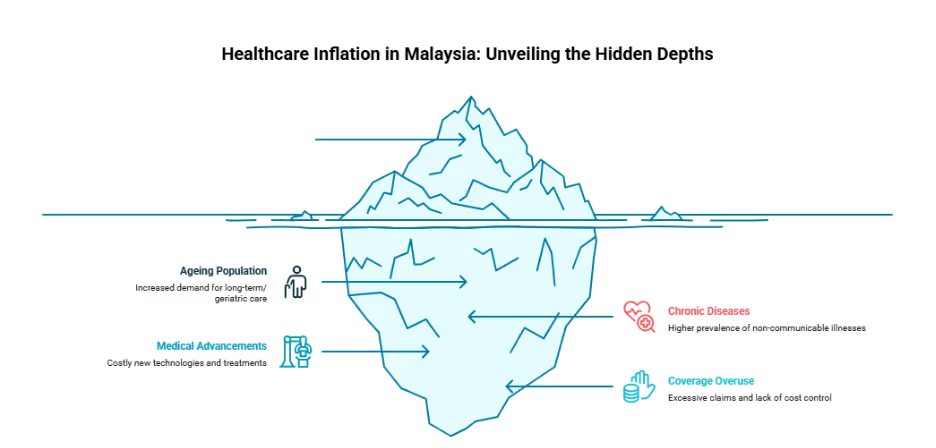
Ageing population
Did you know? Statistically, Malaysia’s average life expectancy has been growing – this essentially means people are living longer lives! However, having longer lives does not necessarily mean being at peak health for most. In fact, it may point to a longer duration of being reliant on medication and/or medical attention. For many, the tail-end of life involves doctor visits, hospital admissions, geriatric care, and medication. This creates a greater demand for such medical services as opposed to its supply, increasing costs. This calls for a need for development and growth in healthcare professionals and geriatric care for later. These factors then contribute to the hike in medical equipment prices and insurance premiums.
Higher prevalence of chronic/non-communicable diseases
Chronic or non-communicable diseases are long-duration, slow-progression illnesses that are not passed from person to person. Examples include cancer, heart disease, diabetes, and chronic respiratory diseases. From a Mercer Marsh Benefits 2025 Health Trends report, there have been increasing cancer cases among the younger working age populations globally. There is also a risen frequency of claims pertaining to circulatory system-related (cardiovascular and cerebrovascular) diseases and respiratory conditions. Cancer and diseases of circulatory systems are the top 2 most costly claims, too. Not only that, but the climb in obesity amongst Malaysians also increases the nation’s risk of cardiovascular disease and diabetes. With some of Malaysia’s top claimed diseases being heart diseases and respiratory system problems, it makes sense then the reason for inflation.
Technological and medical advancements
The healthcare sector is not exempt from moving with the ever-evolving world – cue technological and medical advancements. In recent decades, we have observed cutting-edge technologies used for medical examinations, treatments and surgery be it through machines, robots or lasers. There have also been new drugs that are far more effective in treating certain illnesses and conditions. While greatly moving medicine towards the future, any such advancements would mean an increase in costs, that is, until the novel becomes the new normal.
Excessive use of coverage and benefits
The presence of insurance coverage and benefits positively impacts the livelihood of people, especially when the time or circumstances call for it. Whether intentional or not, however, there is a possibility of overutilisation of such. These could be marked by a rise in claims frequency, lack of cost controls, and overlapping coverage (perhaps of two insurance policies or between insurance policies and hospital allowances offered by a company). Alas, many people are unaware of their claiming habits, let alone the long-term effects of those habits. This results in excessive demand for medical services or medication, in comparison to the supply, leading to inflated costs.
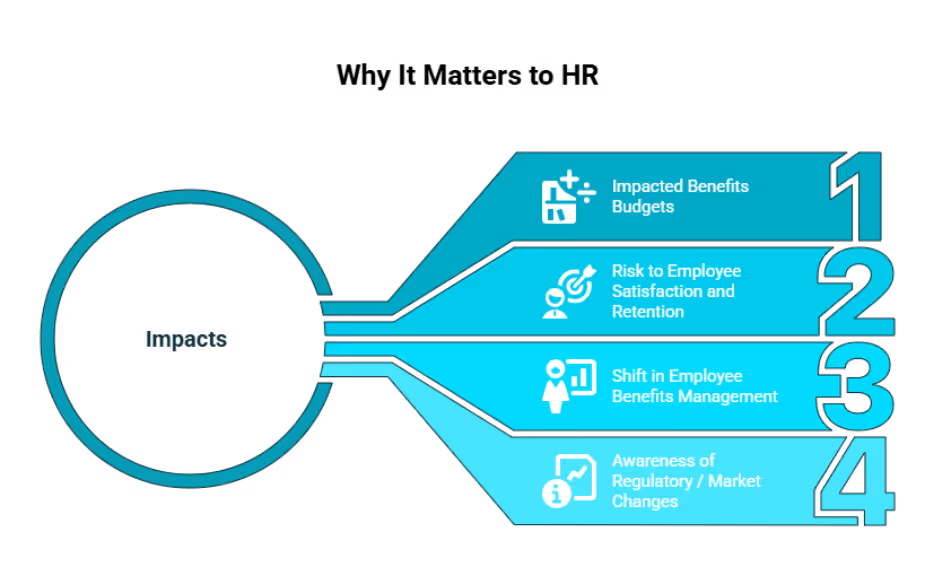
Impacted benefits budgets
Aside from the basic salary and annual leave allowance, many organisations offer benefits packages to better engage and retain employees. With medical inflation, HRs would need to assess and reallocate their budgets well. Insurance premium hikes would leave less room in budget allocations for other benefits and allowances.
Risk to employee satisfaction and retention
Employee benefits are no longer optional in today’s day and age. With the increasingly competitive and demanding employment climate, good benefits packages bring employee satisfaction and retention. If coverage is reduced or benefits are cut, it may lead employees to seek greener pastures.
Shift in management of employee benefits
Due to inflation, companies and their HRs need to observe a shift from being reactive to proactive when it comes to employee benefits management. It is important to know what brings the greatest value to employees, or else there could be a perceived reduced benefit value if irrelevant benefits are offered. This then requires analytics of employee benefits claims data towards improved benefits design and perhaps stop overspending on employee benefits.

Awareness of regulatory / market changes
Keeping abreast of the latest updates on regulatory policies, industry trends, and market outlook is essential for HRs. This could help in pivoting and navigating changes early and effectively, especially those which involve expenses such as insurance premiums and prices of services.
In efforts to keep the nation’s inflation stabilised, the Malaysian government has committed to roll out a basic medical and health insurance/takaful (MHIT) product and a diagnosis-related groups (DRG) payment model in the coming years.
Despite these measures, organisations would have an upper hand acting early upon the ongoing and incoming effects of inflation. Not only would it give organisations a competitive edge in their respective industries, but also as a talent pool magnet. Medical inflation is here to stay a while, and the best we can do is to navigate it to the best of our abilities and expertise.
So, what are you waiting for? Grab the opportunity to mitigate risks and align benefits programmes with budget reality now. Start small and proactively work from where you’re at. Things don’t change overnight! You can start by spotting the areas of employee benefits you may be overspending on, then determine which to tackle to stop it. Our HR Guide: Spot and Stop Overspending on Employee Benefits would be a good first step towards navigating this inflation.
HealthMetrics is a unified digital TPA platform designed to streamline healthcare administration for insurers and corporates across Southeast Asia. It connects you to a regional healthcare network, automates claims and benefit management, and delivers real-time insights to optimise cost, care, and experience.
Whether you’re managing members at scale or navigating complex cross-border care, HealthMetrics empowers you with smarter tools and a seamless ecosystem.
Explore the HealthMetrics Platform or connect with our team to learn how we’re transforming healthcare access.
48 hours saved in benefit reimbursement.
HealthMetrics’ data-driven approach has been able to accelerate the processing of employee's health benefits significantly.
Read study >
85% reduction in administrative task
Companies can reduce up to 85% of time spent on HR administrative task and this frees up time for HR on more important tasks.
Read study >
Our pricing plans vary in terms of the features and services that are included, so you can select the one that offers the right mix of benefits for your specific requirements. Whether you are a small business owner, a freelancer, or a larger organisation, we have a pricing plan that is tailored to your needs.
You can view the details of each pricing plan on our website, and our customer support team is always available to answer any questions you may have and help you choose the right one for you.
Reach out to our 24/7 customer support through multiple channels.